Stop Consuming. Start Creating. Here’s Why It Matters.
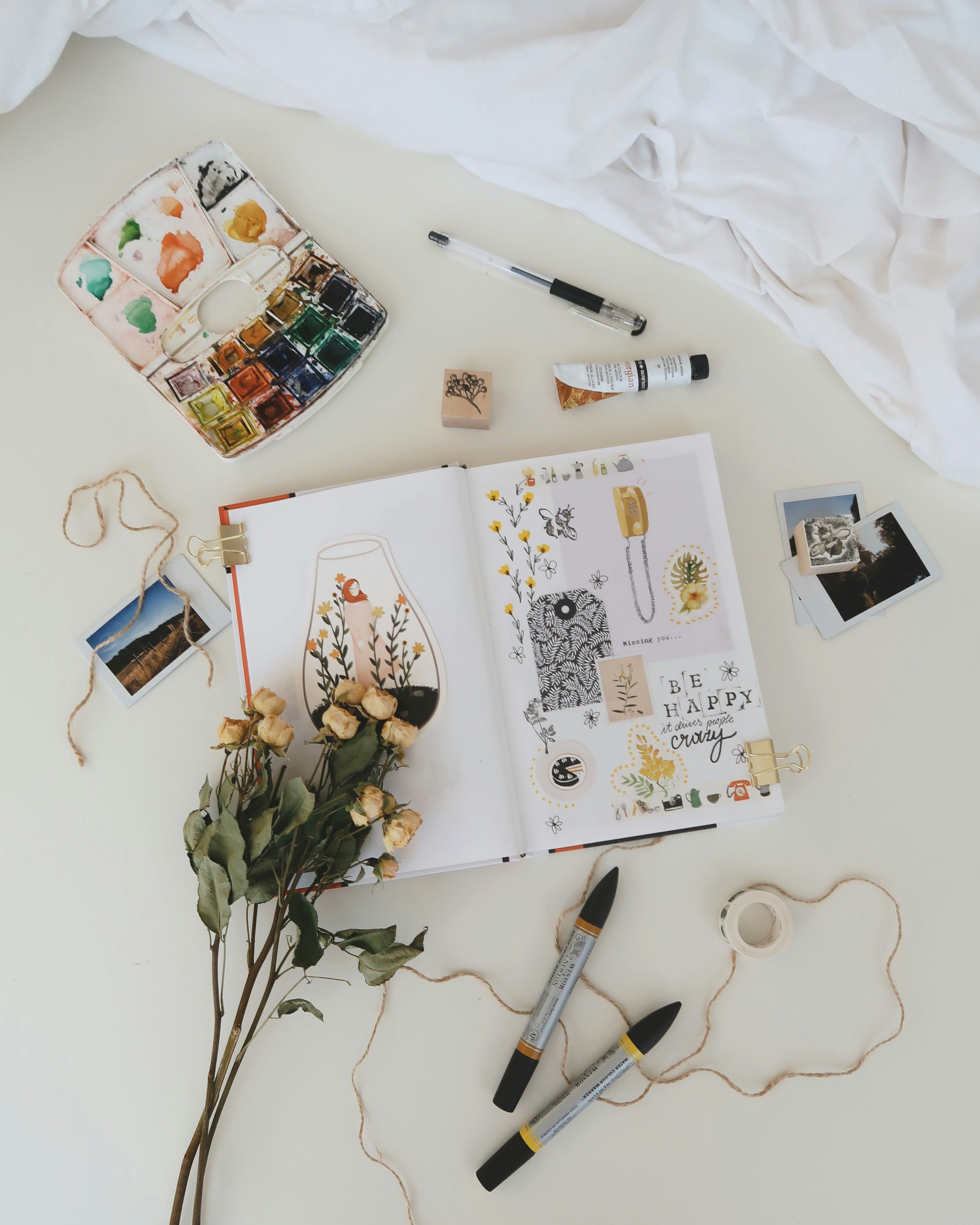
Photo by Estee Janssens
You know that feeling. The one where you sit down to create something, anything, and your mind goes completely blank. The idea that felt so alive an hour ago has vanished, and in its place is a tightening in your chest, a quiet frustration that begs you just to give up.
Whether you call yourself a creative or not, you’ve been there. And here’s the thing: we are all creative. That’s not a motivational platitude. It’s biology.
We Are Born to Create
As humans, we constantly generate things. Cooking a meal, solving a problem at work, figuring out a new route home: all of it draws from the same creative centers in the brain. Creativity isn’t reserved for artists. It’s innovation, critical thinking, and the ability to take an idea and put it into motion. It’s what changes the energy of a moment and sometimes, reality itself.
It’s worth distinguishing creativity from artistry. In the Western sense, an artist is someone who tangibly makes things as a form of self-expression. Creativity, on the other hand, is something we engage in at all times. It’s not a talent. It’s a function. And it’s one we’ve been slowly socialized out of.
The Real Culprit: Overconsumption
In the classroom, we are taught to absorb information but are rarely given the tools to apply it through our own unique lens. Over time, we internalize the idea that creativity belongs to a select few, when in reality, it is our birthright.
Today, two forces have quietly hijacked it: overconsumption of information and social media.
Research consistently shows that digital media erodes our attention span. When we are in a constant state of consuming, scrolling, reading, or watching TV, our brains slip into passive mode. The muscles required for original thinking and imagination begin to atrophy. We stop making and start absorbing, and the imbalance takes a toll.
This matters beyond just creative output. Studies show that engaging our creative functions is one of the key pillars of mental well-being, alongside social connection, exercise, nutrition, and nature. When we create, we regulate stress, boost mood, and reconnect with something essential in ourselves. You could say it is our truest, rawest form of human nature.
What Your Brain Actually Needs
Here’s where the neuroscience gets interesting.
Mind-wandering, that loose and drifting state where thoughts float freely, is not wasted time. It activates a brain region called the Default Mode Network (DMN), which quiets the parts of the brain associated with productivity and executive function. In doing so, it opens a door to imagination, insight, and creative thinking that our busy, distraction-filled lives rarely allow.
This is why a walk, a meditation, or even a period of boredom can suddenly surface your best ideas. These aren’t interruptions to the creative process. They are the creative process.
Flow state operates similarly. That feeling of being completely locked into a task, uninterrupted, where hours pass without notice, requires the same conditions: stillness, focus, and freedom from digital noise.
The problem is that we have less and less access to either. The constant barrage of media, notifications, and information, even excessive reading, corrodes our ability to enter the states of consciousness where creativity lives.
Creativity also reduces aging and mental decline.
A striking study analyzing around 1,400 participants found that creative acts such as dancing, music, strategic gaming, and art significantly reduced cognitive decline, making the brain appear measurably younger than that of the non-creative control group. This kind of engagement also serves as a form of neuroprotection. The challenge of putting our minds to creative tasks activates brain regions that differ from those associated with logical reasoning, the areas we tend to rely on most. Using fMRI, the study also found greater connectivity between brain regions most vulnerable to aging-related disease and cognitive decline. In other words, creative experiences exercise parts of the brain that might otherwise wither through disuse, helping to preserve memory and healthy cognitive function over time.
So What Do You Do About It?
The evidence points to something simple, if not easy: create more than you consume. Protect your attention. Let your mind wander and use your imagination. Step away from the scroll.
This might involve:
Create for the process, not the outcome.
Pick up something purely for the joy of doing it. Learning to draw, bake, write poetry, play an instrument, take photos, dance, build, or even pick up a sport like tennis or volleyball. None of it needs to be good. It just needs to be yours.
2. Learn to play.
Play is not frivolous. It is essential. It engages the parts of the brain responsible for decision-making, imagination, emotional regulation, and cognitive function. Play with your pet, your kids, your friends, or by yourself. Let yourself be unserious for a while. You might be surprised by what opens up.
3. Do less. Let your mind wander.
Productivity culture has convinced us that every moment must be optimized, but burnout is the cost of that belief. When free time appears, resist the urge to fill it. Take a walk, do something you’re already good at, or simply sit with your thoughts. Follow where the mind goes. That wandering is not wasted time. It is where creativity lives.
4. Consume less. Create more.
Put down your device. Turn off the noise. What remains when the distractions fall away is something worth paying attention to: the richness of the present moment, and the creator that has been inside you all along.
Your creativity isn’t gone. It’s not like you’re not born creative. You are creative. It’s just waiting for a little silence and attention.
